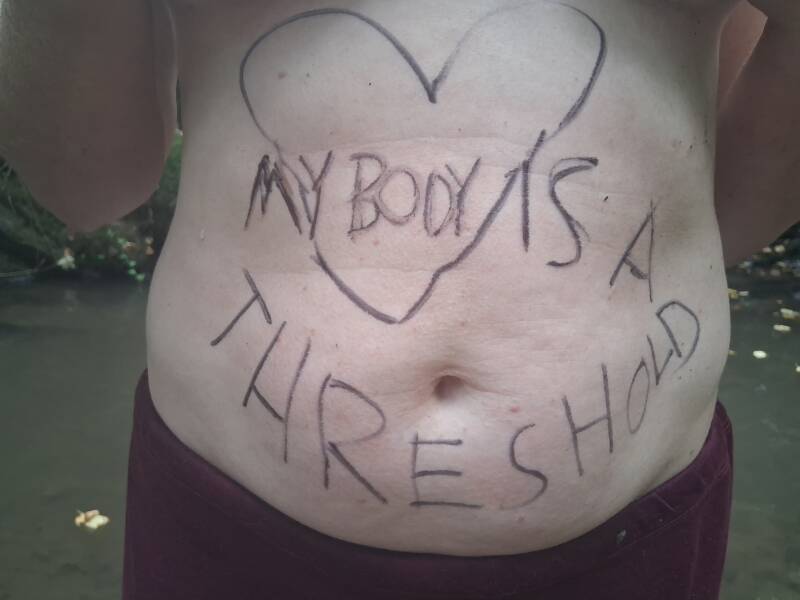
"As I release the need to perform completion or healing, I’m more drawn to the idea of alchemical storytelling. If you have a genetic illness with no cure, a divergent nervous system, a wounded heart, if you can’t undo what happened, how can you recontextualize trauma ? How can you tell a new story about it?" Sophie Strand
For some 16 years now I have been living with the awareness of the fragility of my own health - I was diagnosed with an autoimmune disease, which in a way at the time felt like a relief (there is a name for these scary symptoms! and drugs that work!) Yet the uncomfortable reality of how most autoimmune diseases work took some some time to settle - there is rarely a "cure", and it is most likely caused by things like stress, so in a way am I also to blame for getting it in the first place? At the time I was living in a different country, working 40 hours/week as a newly hatched nurse and my relationship to my husband was slowly unravelling as the extent of his mental health struggles (or the way he was coping with them) were starting to shine through the honeymoon phase of our love. Or it had been for a while but I had quietly tried to shut my eyes to that reality.
Through these years of being intermittently in remission and then back on the medication I have started to question things like my general idea of health, my body and the connotations of dis-ease. Was it a personal failure of mine to not recognize the signs of an unsustainable lifestyle and undersupported energysystem? Was it a failure of my body to "malfunction" like this? How do we determine bodily succes? What is health when you are diagnosed with a chronic illness?
With the backdrop of the work of wise brothers and sisters like Gabor Mate, Sophie Strand, Bayo Akomolafe and many other guides I have come to the conclusion that my body is actually wise. It seemed like a completely apt reaction to the circumstances under which I was living. Epigenetics has finally opened our eyes and science to the way our bodies are in a constant and dynamic nterplay with the environment in which we live and our emotional reality. So my disease highlighted not only my situation at the time but also the way I had been taught to be in relationship with my body and my felt sense.
I imagine this is not unique to me, but something many Millennials will recognize: being born by caesarean section, placed in childcare at a very young age, educated in a largely authoritarian system—even after corporal punishment was banned—and raised by emotionally immature parents who were themselves recovering from childhoods in which many basic needs had gone unmet. There were few resources or opportunities to truly be with, or listen to, our bodies.
The way I have tried to live with my disease, is maybe also reminiscent of this same relationship. I have tried to cajole, excercise, diet, meditate my way out of my symptoms obscuring also what health is for me. I feel the lines have blurred somewhere along the way and health has become less of a destination and maybe more something...I have to define for myself. And it is something I have to continuously revisit, reframe and dialogue with.
In the framework of parts work, I would say my main obstacles to listening to my body have been the parts of me who are productive, who have a belief that "I shouldn't be difficult", who believe "rest has to be earned". These are parts that have kept me (feeling) safe, who gave me nods of approval or respect from caregivers, elders or employers. These are also parts of me that form part of this conversation around health, because can you be "healthy" when you haven't got the same capacity for stuff that you used to? I have realised there is also fear connected to this...dialoging. Because not only my worth but also a lot of my identity has been tied to these parts and their function. As a lot of other people in the same situation, my dis-ease not only prompted radical changes to my interaction with my body but through unraveling I was set on a journey to soul. I want to say I am still on this journey, still learning. Still somewhere in this liminal space.
In light of this I have searched a lot for some reframing of how to understand my body and dis-ease and I stumbled upon the wise musings of Sophie Strand. I feel like there are less answers but maybe more a softening of boundaries in her writing; it feels like medicine:
"If I can’t fix this then let me understand how it could be my superpower. If I can’t close my sensory gating, then open me wider. Dilate me like a cervix so that I may be the birth canal for stories that are not about human beings and human progress. Let me become a doorway for viruses and ecosystems and fungi and dove song. Let me become a doorway so big and so open that a new way of being can emerge, one not tied to the fiction of human individuals."
With open arms, Signe